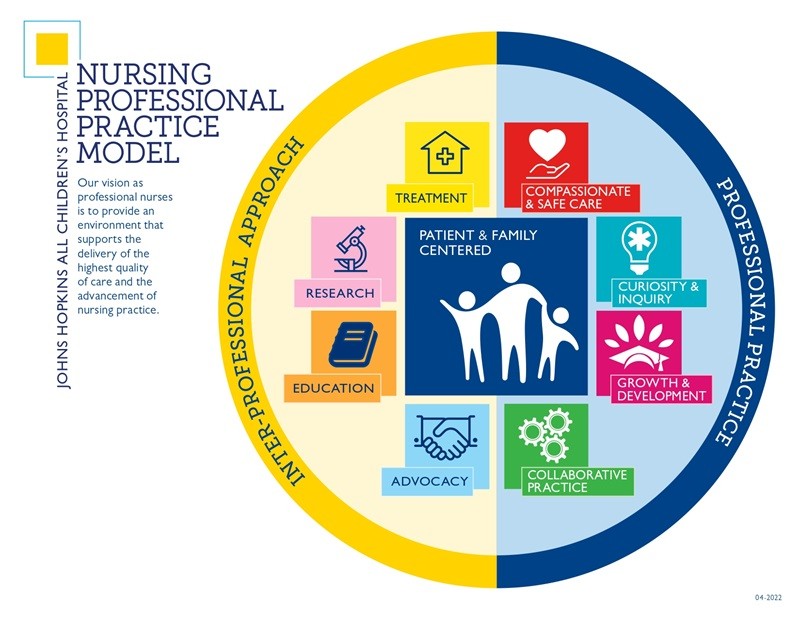
العلاقة بين التعليم، المهارات، والبحث العلمي تُعد مهنة التمريض ركيزة أساسية في الرعاية الصحية، حيث ترتقي بجودة الخدمات الطبية من خلال الجمع بين المهارات التقنية، القدرة على التواصل، ومفاهيم البحث العلمي. 1. مفاهيم أساسية في التمريض وفق المجلس الدولي للممرضين، يُعرّف التمريض بأنه مهنة علمية وأخلاقية تُعنى بتعزيز الصحة، الوقاية من الأمراض، وحماية المريض ضمن إطار المجتمع والأنظمة الصحية : من خلال تعريف جمعية التمريض الأمريكية، يُنظر إلى التمريض كفنّ وعلم في آن واحد، يواجه التحديات الصحية من خلال الرعاية المتعاطفة والتفكير النقدي : 2. العوامل التي تؤثر في مهنية التمريض الكفاءة في الاتصال والقدرة على التكيف أثناء الأزمات تُعد من أهم السمات المؤثرة في احترافية الممرض الاستمرار في التعليم والتطوير المهني يُعزز جودة الأداء ويساهم في بناء الثقة بالمهنة الانخراط في البحث العلمي والممارسة المبنية على الأدلة يساعد في تحسين نتائج الرعاية وسلامة المرضى 3. أهمية النماذج البصرية في المهنية التمريضية تسهم النماذج المهنية، مثل تلك المعروضة أعلاه، في توضيح كيفية تنفيذ التمريض للعناية القائمة على العلاقة بين الممرض والمريض، دعم اتخاذ القرار، والمدى الهيكلي للتدريب والقيادة ضمن فرق الرعاية الصحية. تتطلب مهنة التمريض بيئة تعليمية مستمرة، دعم للبحث العلمي، وتقدير للقيم الإنسانية لضمان نمو احترافي ينعكس إيجابياً على جودة الرعاية الصحية.